
A planned operation, like a hip or knee replacement, comes with one big advantage: time to prepare. Yet many families only start thinking about post-operative care at home on the day of discharge, when a nurse asks, “Who’s going to help at home?”
This guide explains what post-operative care involves, why it’s worth planning before surgery, what the hospital usually provides and how to get the home ready. It also covers when a little extra help can make the first few weeks much easier, for your loved one and for you.

Key Takeaways
- Post-operative care is the support someone needs after an operation, from pain relief and wound checks to help with washing, dressing and meals.
- Hospital stays are often short, but recovery can take months, so most of it happens at home.
- Planning before surgery means the home, the equipment and the help are ready on day one.
- The hospital team will advise on exercises, equipment and medicines. Follow their advice above anything else.
- Extra help at home in the first weeks can reduce the risk of falls and make recovery less stressful.
What is post-operative care?
Post-operative care is all the support someone needs to recover safely after an operation. Some of it is medical and handled by the NHS, such as checking the wound, removing stitches and managing medicines. Much of it is practical: getting washed and dressed, preparing meals, moving around safely and keeping up the exercises the physiotherapist has set.
In the first days and weeks, the practical side can be the hardest part. Simple jobs like putting on socks or getting in and out of the bath may be off limits for a while, and someone who lives alone can quickly struggle.
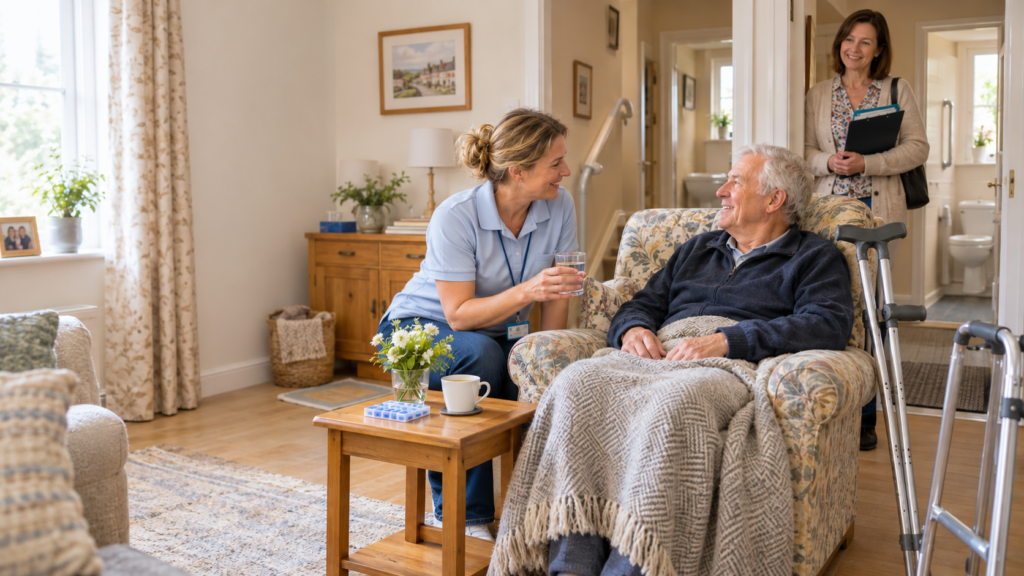
Why plan post-operative care at home before surgery?
Hospital stays after planned operations are often short. For a hip replacement, for example, the NHS says recovery may take several months, even though people can usually go home 1 to 3 days after the operation. That means most of the recovery happens at home.
Planning ahead helps in three ways:
- Nothing is rushed. You can choose the support you want, rather than taking whatever is available at short notice.
- The home is ready. Equipment is in place, rooms are arranged and the fridge is full before the big day.
- Your loved one feels more confident. Knowing there’s a plan takes away a lot of worry, which helps recovery too.
What the hospital usually provides
Hospital staff will usually start planning to leave hospital with your loved one before or during their stay. That often includes:
- A pre-operative assessment, where you can raise any worries about managing at home.
- Advice from a physiotherapist or occupational therapist on exercises and everyday tasks.
- Walking aids and equipment, such as crutches, a frame or a raised toilet seat.
- Medicines to take home, with instructions on how to use them.
- Follow-up appointments, for example to check the wound or review progress.
If your loved one is assessed as needing short-term help to recover, they may also be offered intermediate care or reablement, which is free for up to six weeks. Our guide to free care after a hospital stay explains who qualifies and what happens when it ends.
It’s worth knowing that this support isn’t automatic, and it may not cover everything. Asking early gives you time to fill any gaps.
Prehabilitation: getting ready before the operation
Prehabilitation, or “prehab”, simply means getting as fit and well as possible before surgery. People who go into an operation in better shape often find recovery easier. Your loved one’s surgical team may suggest:
- Staying active, with gentle walks or exercises they’ve been shown.
- Eating well and drinking enough, to give the body what it needs to heal.
- Practising with equipment, such as crutches, before the operation if they can.
- Stopping smoking, if they smoke, as the hospital will usually advise.
Only follow exercise advice given by the surgical team, physiotherapist or GP. They know what’s safe before this particular operation.
Getting the home ready
A few changes before surgery can make the first weeks much safer and easier:
- Clear the way. Remove rugs, trailing cables and clutter from the routes they’ll use most.
- Think about the stairs. If they’ll struggle, consider moving a bed downstairs for a while.
- Find the right chair. A firm chair with arms, at a height that makes getting up easier.
- Keep things within reach. Move everyday items to waist height so there’s no bending or stretching.
- Stock up. Fill the freezer with easy meals and make sure there are plenty of drinks.
- Plan for pets. Who will walk the dog or let the cat out?
- Make it easy to get in. If carers will be visiting, a key safe can help.
Elderly rehabilitation: what support might be needed, and when
Older people can take longer to recover from an operation, and spending too long sitting or lying down can quickly lead to loss of strength. Our guide to weak legs after a hospital stay explains why, and how to help. As a rough guide, support often changes like this:
| What help might look like | |
| First few days home | Help getting in and out of bed, washing, dressing, meals and medicines. Someone around to reduce the risk of a fall. |
| The first six weeks | Encouragement with exercises, help with tasks that involve bending, lifts or company to follow-up appointments, shopping and housework. |
| After six weeks | Often less help is needed, but some people still need support with heavier jobs, or company as their confidence returns. |
Post-operative care at home with Caring with Dignity
Planned surgery is one of the best times to talk to us, because we can have everything ready before your loved one comes home. Our post-hospital and reablement care can help with:
- Personal care, such as washing and dressing, at your loved one’s pace.
- Meals and medicines, with meal preparation and medication prompts.
- Exercises, following the plan set by the physiotherapist, with plenty of encouragement.
- Getting to appointments, through our appointment buddying service.
- The little things, like fetching a pint of milk, letting the cat out or walking the dog.
We keep the professionals involved updated on how things are going, and we step back as your loved one gets stronger. If some help is still useful after that, we can carry on with everyday home care.
Your post-operative care questions answered
How long will someone need help after an operation?
Can we arrange post-operative care before going into hospital?
Who looks after the wound once they’re home?
Will we get free care after surgery?
What if recovery takes longer than expected?

Coming home from hospital, or is reablement coming to an end?
Whether a discharge date has just been set or support is about to stop, our team can talk you through your options and arrange a free care assessment, so you stay in control of when visits happen and what they include. No pressure, just a friendly chat.
or email manager@caringwithdignity.co.uk