
Dad went into hospital walking to the shop every morning. He came home a fortnight later struggling to get from the bed to the bathroom, his legs shaky and unsure. If that sounds familiar, you’re far from alone.
Weak legs in elderly people are very common after a hospital stay. Days spent lying in bed or sitting in a chair quickly take away strength, stamina and confidence. The good news is that, with the right support, a lot of what’s been lost can often be won back. This guide explains why it happens, the signs to look for, when to get urgent help and how families can help someone get moving again at home.
Key Takeaways
- Weak legs after a hospital stay are usually caused by too much time in bed or sitting still. The hospital team may call this deconditioning.
- Strength can start to drop within a day or two of being admitted, and older people are especially affected.
- Sudden weakness, especially on one side of the body, is different. Call 999 straight away.
- Little and often is the key: getting dressed, sitting out of bed and short walks all help.
- Always follow the exercises a physiotherapist or occupational therapist has set, rather than guessing.
Why do older people get weak legs after a hospital stay?
When muscles aren’t used, they lose strength surprisingly fast. The big muscles in the legs, which do the work of standing up, walking and climbing stairs, are often the first to feel it. Joints stiffen, balance gets worse and everyday tasks start to feel like hard work. Confidence often drops too, which can make someone even less likely to move.
You may hear the hospital team call this “deconditioning”, or “hospital deconditioning” when it happens during a stay. It simply means the loss of strength and fitness that comes from being inactive. Knowing the word helps when you’re talking to doctors, nurses and therapists.
NHS England has highlighted that frail older people can spend most of their time in hospital lying in bed, and that muscle wasting can start within a day or two of admission. It’s why many hospitals now encourage patients to sit up, get dressed and keep moving.
Nobody is to blame. People are in hospital because they’re unwell, and rest is part of getting better. But for an older person, even a short stay can leave them noticeably weaker than when they went in.
Signs of lost strength to look out for
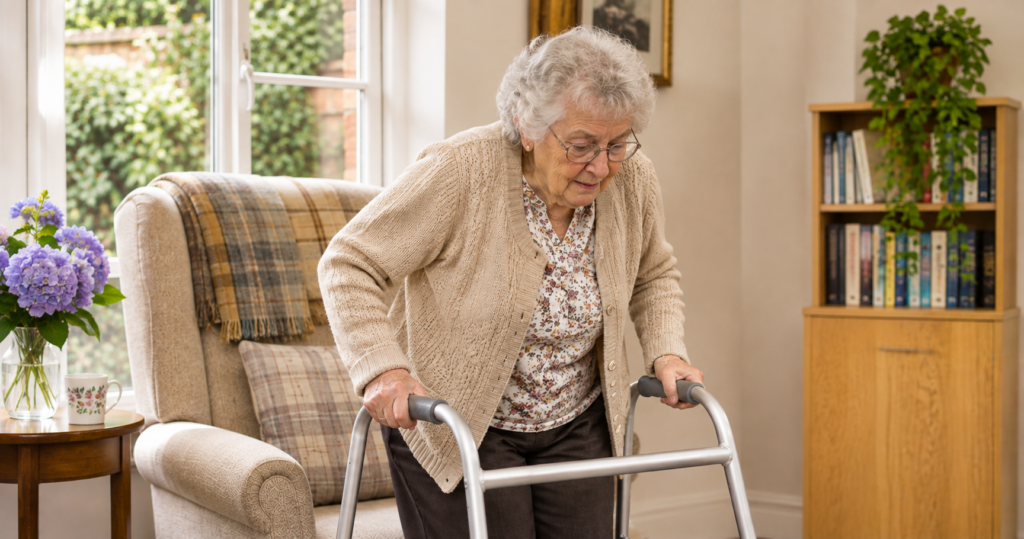
Weakness after a hospital stay can creep up quietly. Signs your loved one may be affected include:
- Getting out of a chair or bed is harder than before, or needs several attempts.
- Walking shorter distances, shuffling, or needing to hold on to furniture.
- Legs feeling shaky or giving way, especially when they first stand up.
- Getting tired quickly, even after small tasks like washing or dressing.
- Feeling unsteady or worried about falling.
- Spending more time in bed or in one chair than they used to.
- Losing interest in getting up, going out or doing things they used to enjoy.
Some of these can also be signs of other health problems, so it’s always worth mentioning them to the GP or the team supporting your loved one.
When weak legs need urgent medical help
Most weakness after a hospital stay comes on gradually and improves with time and movement. But some changes need help straight away:
- Call 999 if weakness comes on suddenly, especially on one side of the body, or if their face drops on one side or their speech becomes slurred. These can be signs of a stroke.
- Ask for an urgent GP appointment or call NHS 111 if one leg becomes painful, swollen, red or darker in colour. Blood clots are more likely after a hospital stay, especially if someone hasn’t been moving much.
- Call 999 if leg pain or swelling comes with breathlessness or chest pain.
- Speak to the GP if they’re getting weaker rather than stronger, have had a fall, or seem more confused or drowsy than usual.
What is PJ paralysis?
“PJ paralysis” is a phrase the NHS uses for the effect of staying in pyjamas and in bed for too long in hospital. Once someone is in nightclothes all day, they tend to behave like a patient: lying down more, walking less and losing strength faster.
Getting dressed in everyday clothes sounds small, but it helps people feel like themselves and gives them a reason to get up. The same idea works brilliantly at home.
From bed bound to back on their feet: what’s realistic?
If your loved one has become bed bound after a long illness or hospital stay, it’s natural to wonder whether they’ll walk again. Every recovery is different, and some people won’t get back to where they were. But many people regain far more than their family expected, especially when support is consistent and encouraging.
Progress often comes in small steps. Sitting on the edge of the bed. Standing with help. A few steps to a chair. Then to the window, the kitchen, the front door. Each one builds the strength and confidence for the next.
What makes the difference is doing a little every day, following the plan set by the professionals, and having someone alongside to encourage. That’s also the idea behind reablement, and our guide explains how reablement works if your loved one has been offered it.
How to help someone get moving again at home
You don’t need to be an expert to make a real difference. These everyday habits all help:
- Get dressed every day. Day clothes, proper shoes or well-fitting slippers, hair brushed. It sets the tone for the day.
- Sit out of bed for meals. Eating at the table or in a chair means getting up and moving at least three times a day.
- Little and often. Several short walks around the house are better than one long, exhausting one.
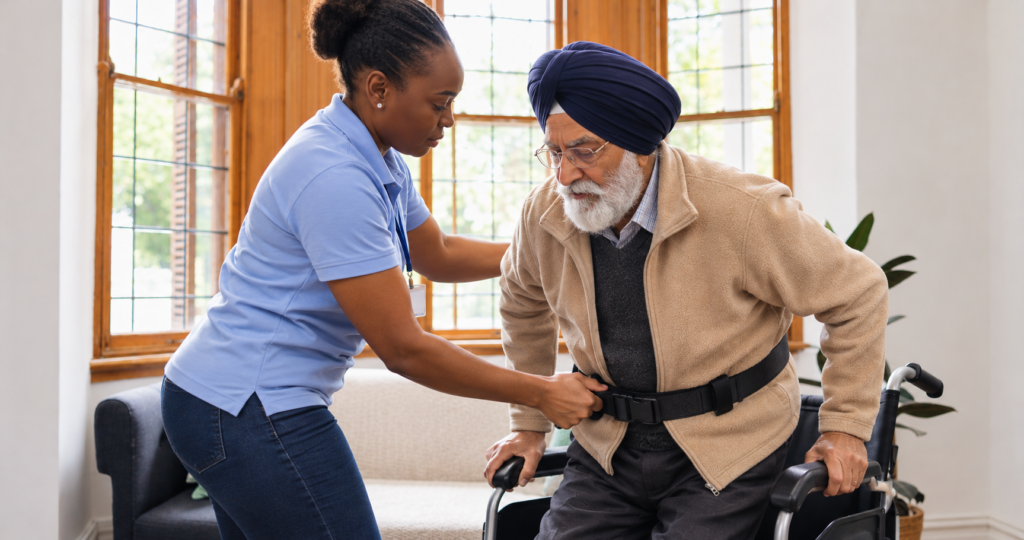
- Keep up the exercises. If a physiotherapist or occupational therapist has left an exercise plan, do it together at the same time each day. A bit of encouragement and a laugh along the way makes it much easier to stick to.
- Let them do it themselves. It’s tempting to help with everything, but every task they manage builds strength.
- Eat and drink well. Regular meals and plenty of fluids give the body what it needs to rebuild.
- Celebrate progress. Reaching the garden or making a cup of tea alone is worth noticing.
Exercises for weak legs in elderly people: keeping it safe
Exercise is one of the best ways to rebuild strength in the legs, and NHS guidance for older adults recommends breaking up long periods of sitting and doing activities that improve strength and balance. But after a hospital stay, the right mobility exercises for elderly people depend on the person, so safety comes first.
- Follow the professionals’ plan. Stick to the exercises a physiotherapist or occupational therapist has shown your loved one. If you don’t have a plan, ask the GP or the team who discharged them.
- The sit to stand exercise is one physios often use: standing up from a sturdy chair and sitting back down, slowly and with control. Only do it if it’s been shown to your loved one, and use a firm chair with arms.
- Clear the space first. Move rugs, cables and clutter, and make sure there’s something stable to hold.
- Stay close by, especially for the first few times, without taking their weight yourself.
- Stop if something isn’t right, such as pain, dizziness or breathlessness, and seek advice.
Never try to lift someone who has fallen or can’t get up. Call for help instead. If they’re hurt or unwell, call 999. If you’re not sure what to do, NHS 111 can advise.
When to ask for more help
If your loved one isn’t improving as you’d hoped, ask the GP or your council’s adult social care team about an occupational therapy assessment. It can lead to equipment or adaptations, such as rails or a raised chair, that make home safer while their legs get stronger.
If an operation is coming up, it’s worth thinking ahead. Our guide to planning care before an operation explains how to arrange support so your loved one keeps moving from the day they come home.
How Caring with Dignity helps people get moving again
Helping people regain their strength is one of the things we’re proudest of. Through our post-hospital and reablement care, our carers follow the exercise plans set by occupational therapists and physiotherapists, with plenty of encouragement and good humour. We monitor every package closely and keep the professionals updated on what’s working and what isn’t.
Our Registered Manager, Sandrea, is a former NHS moving and handling specialist, so our team knows how to support people to move safely and with confidence. We’ve helped people who had spent weeks in bed to get up and moving again, but we’re always realistic about what’s going well and what isn’t.
As your loved one gets stronger, we step back. If a little help is still useful after that, we can carry on with everyday home care from the same familiar faces.
Your questions about weak legs after a hospital stay
Can weak legs get stronger again after a hospital stay?
How long does it take to recover from hospital deconditioning?
What causes weak legs in elderly people?
What is the difference between deconditioning and frailty?
How can we stop someone getting weaker while they’re still in hospital?
Coming home from hospital, or is reablement coming to an end?
Whether a discharge date has just been set or support is about to stop, our team can talk you through your options and arrange a free care assessment, so you stay in control of when visits happen and what they include. No pressure, just a friendly chat.
or email manager@caringwithdignity.co.uk